
February 05, 2026
Written by:
Greg Schubert
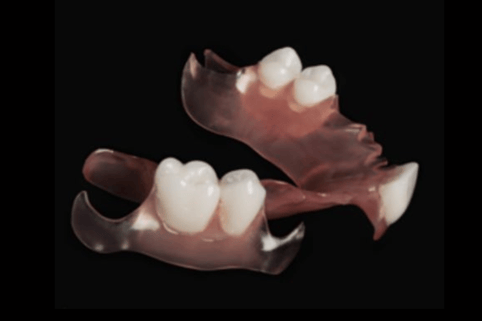
If you want a modern alternative to traditional acrylic or cast-metal partials for your patients, flexible partial dentures are the answer. Made from lightweight, thermoplastic materials, these appliances adapt to the natural contours of your patient’s mouth, making it the best denture option for comfort.
Their popularity has grown as more patients prioritize esthetics and minimally invasive solutions, though you might still be wondering what exactly the benefits of flexible partial dentures are.
Well, we’re here to break down the pros and cons of flexible dentures. We’ll talk about when they work best, when they might fall short, and how working with a premium dental lab like PRO-Craft can give your patient the best dentures they need and deserve.
Flexible partial dentures are typically made from nylon-based thermoplastics such as Valplast®. These materials are meant to flex when they’re being used, so that the prosthesis relies on flexible cosmetic clasps that use the natural contours of your patient’s mouth to hold it in place, rather than uncomfortable metal clasps or rigid frameworks.
Although flexible dentures are an amazing advancement in dental restorations, just like with any other restoration, they aren’t going to work for everybody. There are patients who will benefit from them more than others.
Common use cases for Valplast® dentures include:
Although flexible dentures are great, they still come with their own list of pros and cons. To really make sure you’re getting the best of the best, partner with a top-quality lab like PRO-Craft to really get Valplast® flexible partial dentures that are the right balance of esthetics and function.

Now that you know what flexible dentures are, let’s talk about some of the benefits and drawbacks of flexible dentures. It can be tough choosing between flexible partial dentures vs. metal, but understanding the pros and cons of flexible dentures, and when they work best, can help you make the right decision for your patient.
First, we’ll focus on why flexible partials like Valplast® dentures are a great fit for many patients like yours.
A few benefits of flexible partial dentures include:
If your patient is considering partial dentures, using flexible denture materials like Valplast® can offer significant benefits. There are also other types of materials you can use for your patient’s restorations, depending on the case.
While there are many advantages, there are also disadvantages to using flexible dentures.
Some of the drawbacks of flexible dentures include:
Despite all the great things flexible partial dentures can provide, there are still certain cases where metal partial dentures might be the better solution for your patient.
Even though flexible dentures can help many of your patients, they aren’t for everyone. Some patients may benefit from something more sturdy or rigid, like metal dentures, to offer better support.
You should consider alternative prosthetic solutions for any of your patients with:
In these cases, acrylic or metal partial dentures (or even other implant-supported options) may be a better fit.
Flexible partial dentures offer comfort, esthetics, and conservative treatment that can work for many patients. Understanding what flexible dentures are, along with their pros and cons, can help you make the most informed and patient-centered recommendations.
Successful flexible denture cases rely heavily on lab expertise. At PRO-Craft Dental Laboratory, we support clinicians like you with:
Our PRO-Craft technicians will work closely with your practice to ensure proper material selection and predictable outcomes. If you want the best restorations for your patients, we can collaborate with you on a case-by-case basis to determine the best solution.
Ready to strengthen your dental practice?
Contact PRO-Craft today for expert support, or get started with our Dental Practice Starter Kit.
Do you know where your dental laboratory work is being done? This is an important question that often gets overlooked. There's a growing trend to offshore dental laboratory work. But what does that...
Read More
Dangers of Offshoring Dental Lab Work Feb 01, 2022 The dangers of offshoring dental work include, lack of oversight from the American Dental Association, difficulty ensuring quality standards, supply...
Read More
Why should I send my dental lab work to PRO-Craft when I can get it for less from another lab? We answer that question in the video below. We also share one of the 10 fundamental processes that...
Read More
As an industry leader in CAD/CAM technology, we have taken the fabrication of digital restorations to a new & exciting level of service.
25791 Jefferson Ave, Murrieta, CA 92562
info@pro-craft.com
877-484-3522