
November 05, 2024

Written by:
Greg Schubert
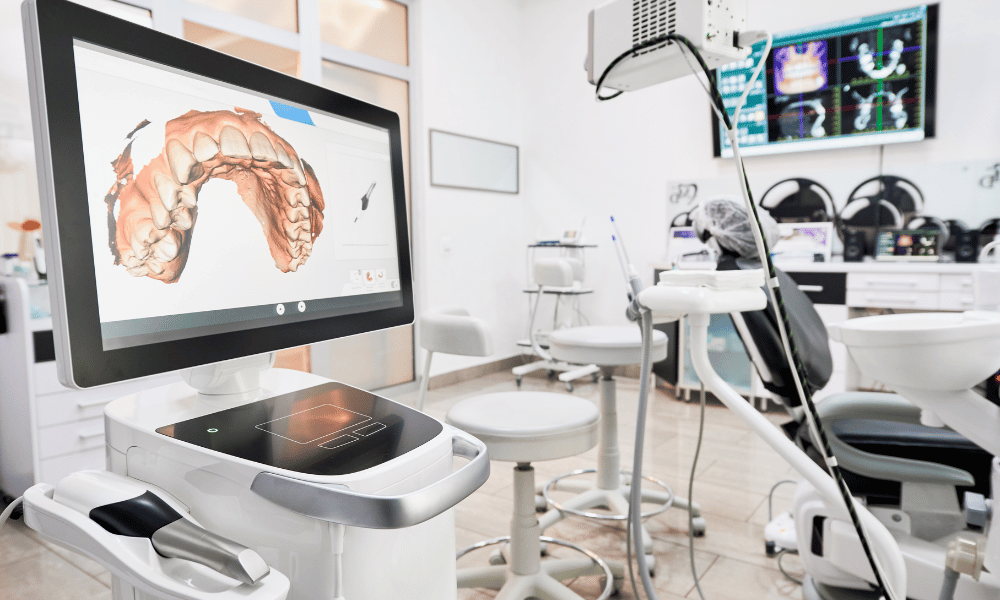
Intraoral scanners have become an important part of digital dentistry, allowing practices to capture detailed digital impressions and send cases directly to dental labs without conventional impression materials. As scanner technology continues to advance, dentists have more options than ever.
The best dental intraoral scanners for 2027 include systems from iTero, 3Shape, Medit, Dentsply Sirona, and SHINING 3D. However, the right choice depends on your practice's procedures, budget, existing technology, software preferences, and lab workflow.
If your practice is still considering the transition to digital impressions, learn more about whether it may be time to go digital.
When comparing dental intraoral scanners, start with the factors that affect how the technology will actually fit into your practice. Accuracy and scanning speed matter, but so do ergonomics, ease of use, software compatibility, and the learning curve for your team.
You should also consider:
The best scanner for a dental office should make the overall workflow easier, from capturing the impression to submitting the finished scan to the lab.
If you’re transitioning to digital scanning, understanding how digital impressions compare to traditional impressions can help you determine what to expect.
The best intraoral scanners offer different combinations of accuracy, portability, software features, and workflow integration. Here are five leading systems to consider for 2027.
Align Technology’s iTero Lumina comes in several versions. The standard iTero Lumina is an intraoral scanner for creating detailed 3D images of the teeth and mouth, while the iTero Lumina Pro adds near-infrared imaging (NIRI), which can help detect cavities between teeth. Both are available in cart-based or portable configurations and support restorative and orthodontic treatments.
For practices interested in adopting digital impressions without purchasing a scanner outright, qualifying practices can also explore PRO-Craft's free iTero digital scanner program.
The 3Shape TRIOS 6 is a wireless scanner built around the company's 3Shape Unite digital workflow. It offers increased scan resolution compared with the previous TRIOS 5 and uses multiple light sources to capture detailed geometry and color information.
TRIOS 6 supports restorative, orthodontic, implant, and dental assessment applications. Its open ecosystem and ability to output STL, PLY, and DCM files can also provide flexibility when working with different labs and treatment partners.
The Medit i900 Mobility is designed for practices prioritizing portability. It offers iPad-native scanning, built-in Wi-Fi 6E, and up to one hour of continuous battery use. Medit reports an approximate full-arch scanning time of 36 seconds, although actual performance depends on the operator and hardware setup.
Medit's digital ecosystem and portable design may make this intraoral dental scanner particularly appealing to practices that want to move a scanner easily between operatories.
Primescan 2 takes a cloud-based approach to intraoral scanning. The wireless scanner works through Dentsply Sirona's DS Core platform, allowing scan data to be captured directly in the cloud rather than requiring dedicated scanning hardware in each treatment room.
The system supports restorative, implant, aligner, and other digital workflows. Scan data can also be shared with dental labs, while open data formats support integration with external workflows.
Note: Practices should account for the required paid DS Core subscription when comparing long-term costs.
Aoralscan Elite Wireless combines conventional intraoral scanning with intraoral photogrammetry (IPG). This two-in-one approach is particularly notable for practices performing All-on-X and other full-arch implant cases because IPG is designed to capture implant positions across the arch.
The wireless scanner can also be used for routine intraoral scanning, making it more than a specialized implant device. Its workflow may be especially worth considering for practices that regularly handle complex implant restorations.

The top intraoral scanners each emphasize different parts of the digital workflow. Rather than focusing only on individual specifications, consider how each system would function in your practice.
| Scanner | Wired/Wireless | Notable Features | Workflow Considerations | Potential Practice Fit |
|---|---|---|---|---|
| iTero Lumina | Wired/mobile configurations | Restorative and orthodontic workflows, iTero ecosystem | Strong integration with iTero and Invisalign workflows | General, restorative, and orthodontic practices |
| 3Shape TRIOS 6 | Wireless | High-resolution scanning, 3Shape Unite, open file formats | Broad digital ecosystem and lab connectivity | Practices wanting flexible digital workflows |
| Medit i900 Mobility | Wireless | iPad-native scanning, Wi-Fi 6E, portable design | Designed for mobility between treatment rooms | Practices prioritizing portability |
| Primescan 2 | Wireless | Cloud-native scanning through DS Core | Requires DS Core subscription and internet-connected device | Practices using or building around the Dentsply Sirona ecosystem |
| Aoralscan Elite Wireless | Wireless | Intraoral scanning plus photogrammetry | Specialized capabilities for full-arch implant scanning | Implant and All-on-X-focused practices |
Specifications and available configurations can change, so practices should confirm current details with the manufacturer before purchasing.
There is no single best intraoral scanner for every dental office. A general practice focused primarily on crowns and bridges may have different requirements than an orthodontic practice or a practice performing a high volume of full-arch implant restorations.
Before choosing the best dental scanner for your office, consider the procedures you perform most often, the technology you already use, your budget, and how easily your staff can incorporate the scanner into daily appointments.
Lab compatibility matters, too. Even the best intraoral dental scanner provides less value if sending scans to your preferred laboratory creates unnecessary steps or compatibility issues.
Choosing an intraoral scanner is only one part of creating an efficient digital restorative workflow. Your dental lab also needs to be able to receive, review, and work efficiently with your digital cases.
PRO-Craft accepts digital restorative scans and works with practices to simplify the transition from impression taking to digital case submission. Qualifying new clients may also be eligible for PRO-Craft's free iTero digital scanner program, which includes a 30-day trial, training, and ongoing assistance.
The best dental scanner depends on your practice's needs. iTero Lumina, 3Shape TRIOS 6, Medit i900 Mobility, Primescan 2, and Aoralscan Elite Wireless each offer different advantages. Consider the procedures you perform, software and lab compatibility, portability, training requirements, and total cost when comparing options.
Modern dental intraoral scanners can provide the accuracy needed for many restorative, orthodontic, and implant applications, although performance varies by scanner, clinical situation, scanning technique, and span length. Accuracy should be evaluated for the specific procedures your practice performs rather than based on a manufacturer's specifications alone.
Before purchasing a scanner, consider accuracy, scanning speed, ergonomics, software compatibility, file formats, lab integration, training, and total ownership costs. The best scanner for a dental office is one that fits naturally into the practice's existing clinical and restorative workflow while supporting its most common case types.
A digital intraoral scan is only as good as the technique behind it. A rushed or incomplete scan means missing margins, distorted contacts, and a restoration that doesn't fit the way it should, which...
Read More
With the development of technology like micro CT scanning, dentistry continues to make technological advancements in the industry. Micro-CT scanning in dentistry is crucial to intelligent...
Read More
Technology continues to make our lives easier. In dentistry, improvement in technology makes life easier for both dentists and their patients. One of the best ways that technology has influenced...
Read More
As an industry leader in CAD/CAM technology, we have taken the fabrication of digital restorations to a new & exciting level of service.
25791 Jefferson Ave, Murrieta, CA 92562
info@pro-craft.com
877-484-3522